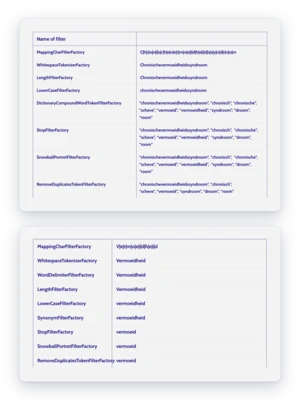
However, what should you do if your visitors are more demanding and expect to be fed the right content when searching for plurals or a combination of words or synonyms? In the majority of cases, such complex queries fall beyond the reach of default search solutions, leading to dreaded messages like ‘Your search yielded no results’. This very quickly leads to user frustration and, subsequently, fewer conversions on your website. And this is only the start of it… What if your website also serves Germanic languages other than English? Suddenly, you are confronted with concatenations of words such as the infamous ‘Rindfleischetikettierungsüberwachungsaufgabenübertragungsgesetz’ or ‘Chronischevermoeidheidssyndroom’.
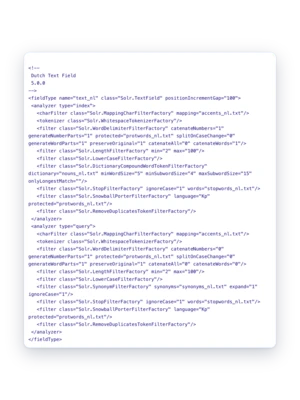
In this blog post, we explain how you can configure Apache Solr to improve your multilingual content indexing and querying. We will shed some light on the ways indexing and querying is configured and can be tested, so you can make sure that Solr can understand your content and return a better result when users are searching through it. We will be using Dutch as an example, because of its compound word complexity. The underlying principles, however, are valid in plenty of use cases for other languages and search-related problems.